(+86)-025-86106536 (+86)-13705159108

 English
- All
- Product Name
- Product Keyword
- Product Model
- Product Summary
- Product Description
- Multi Field Search
Views: 0 Author: Site Editor Publish Time: 2026-08-25 Origin: Site
Cold storage represents the most expensive real estate in the supply chain. Operating a freezer facility costs significantly more per square foot than ambient warehousing, making spatial inefficiency a direct drain on profitability. Sub-zero environments present unique operational challenges that standard dry-storage designs cannot handle. Standard steel becomes brittle at low temperatures. Condensation cycles cause rapid degradation and rust. Poorly designed aisle layouts lead to wasted energy and compromised thermal efficiency across the facility.
Selecting the right Warehouse Racking Systems requires moving beyond basic load capacities. Facility managers must evaluate structural integrity under extreme thermal stress. You must analyze storage density trade-offs, vertical space utilization, and strict alignment with specific inventory turnover models like FIFO or LIFO. A highly optimized freezer environment minimizes the cubic volume of cooled air while maximizing pallet positions, directly impacting the bottom line.
Density vs. Selectivity: High-density systems (Mobile, Pallet Shuttle, Drive-In, Push-Back) maximize expensive freezer footprints but require calculated trade-offs in individual SKU accessibility.
Material Imperatives: Structural steel is overwhelmingly preferred over roll-formed steel in cold environments due to its higher impact resistance and lower susceptibility to cold-induced embrittlement.
Operational Alignment: The optimal system must map directly to your inventory turnover rates, matching strict FIFO requirements (Pallet Flow) or bulk LIFO storage (Drive-In and Push-Back).
Implementation Realities: Successful deployment requires engineering for thermal contraction, specialized galvanization to prevent rust from condensation, and reinforced impact protection for sluggish forklift operations.
Table of Contents
Cubic space utilization shares a direct correlation with refrigeration energy consumption. Every cubic foot of empty aisle space requires continuous cooling, driving up utility bills. Cold storage facilities must prioritize building up rather than out. Maximizing the refrigerated cube reduces initial land acquisition costs and minimizes the physical footprint required for the building envelope. Achieving high density requires evaluating the exact dimensions of your storage media and minimizing wasted vertical clearance between pallet loads and beam levels.
The primary baseline metric for evaluating any layout is the cost per pallet position in a temperature-controlled environment. You calculate this by dividing the total operational and facility costs by the number of accessible pallets. To optimize this metric, facility engineers typically execute the following layout strategies:
Reduce operating aisle widths by implementing very narrow aisle (VNA) or reach-truck configurations.
Specify custom upright heights that utilize the maximum clear height of the building, often pushing past 40 feet.
Implement double-deep or multi-deep storage configurations to eliminate redundant forklift aisles.
Calculate the exact pallet height, including the wooden base and product overhang, to tighten beam spacing and add extra storage levels.
Maintaining consistent airflow around pallets prevents warm spots and inventory spoilage. Sub-zero facilities rely on massive evaporator coils and high-velocity fans to distribute cold air evenly. If storage structures block this airflow, micro-climates form within the racks. Products stored in these dead zones risk falling out of the required temperature range, leading to immediate product loss and regulatory compliance failures.
Different layout designs directly impact HVAC and refrigeration unit efficiency. Longitudinal and transverse flue spaces—the gaps between pallets back-to-back and side-to-side—must remain clear. Fire codes and thermal dynamics usually dictate a minimum 6-inch flue space. High-density configurations like Drive-In or Push-Back require careful engineering to ensure cold air penetrates the deep storage lanes. Facility designers must align the racking aisles parallel to the discharge direction of the refrigeration units to facilitate unobstructed air distribution.
Extreme cold takes a severe physical toll on steel structures. As temperatures drop below freezing, standard carbon steel experiences a reduction in fracture toughness, increasing the risk of metal fatigue and cold-induced embrittlement. A minor forklift impact that would simply dent a rack in an ambient warehouse can cause a catastrophic shear failure in a deep freeze environment operating at -20°F. Material selection must account for these altered physical properties.
Cold storage operations face constant moisture threats. Facilities experience frequent defrost cycles, and loading docks often transition between ambient humidity and sub-zero temperatures. This creates rapid condensation. Baseline requirements for rust resistance mandate specialized coatings. Standard paint often flakes off under thermal expansion and contraction, leaving raw steel exposed to moisture and accelerating structural decay.
Mobile racking features heavy-duty racks mounted on motorized bases that slide along floor tracks. This design eliminates static aisles, opening a single operating aisle only when and where it is needed. Operators control the movement via remote control or warehouse management system (WMS) integration. The tracks sit flush within the concrete slab, allowing seamless forklift movement across the floor without damaging the tires or the track mechanism.
This system serves facilities needing maximum storage density without sacrificing 100% SKU selectivity. It works highly effectively for operations with massive SKU proliferation where direct access to every pallet is mandatory. By condensing the footprint, mobile systems significantly reduce the volume of air that needs to be cooled. This compact layout slashes energy consumption while accommodating the same number of pallets in roughly half the square footage of standard selective layouts.
Pallet shuttle systems utilize motorized carts that run on dedicated rails within deep storage channels. A forklift operator places the shuttle at the front of the desired lane, loads a pallet onto the rails, and commands the shuttle to carry the pallet deep into the rack. The shuttle automatically returns to the front to accept the next load, decoupling the forklift travel from the actual put-away process. These shuttles run on specialized cold-rated lithium-ion batteries designed to hold a charge in sub-zero conditions.
High-volume operations with low SKU counts benefit immensely from this technology. It supports rapid loading and unloading, making it ideal for fast-moving consumer goods (FMCG) in frozen environments. The primary cold storage benefit lies in reducing forklift travel time inside the freezer. This minimizes heat emission from heavy equipment batteries and limits operator exposure to extreme cold, improving both thermal stability and worker ergonomics.
Push-back configurations utilize nested carts that ride on inclined steel rails. When an operator loads a new pallet, the forklift pushes the existing pallet backward up the incline. When a pallet is retrieved, gravity gently rolls the subsequent pallets forward to the picking face. This creates a high-density Last-In, First-Out (LIFO) storage model that typically ranges from two to six pallets deep.
This setup works perfectly for high-density LIFO storage where multiple SKUs are stored. It offers better selectivity than Drive-In setups because each level operates independently. Push-back maximizes vertical and horizontal cube space while keeping forklifts out of the internal rack structure. Keeping trucks in the main aisle drastically reduces impact risks in slick freezer conditions, protecting the structural integrity of the uprights.
Drive-In setups eliminate standard aisles entirely. Forklifts drive directly into the storage bays to place pallets on continuous support rails. Drive-In operates on a LIFO basis, while Drive-Thru allows entry from both sides for a First-In, First-Out (FIFO) approach. Both designs require pallets of uniform size and structural integrity to sit safely on the horizontal rails without sagging.
Operations storing bulk quantities of uniform products with long shelf lives rely heavily on this method. It represents a highly cost-effective method for achieving high density. Driving inside the confined lanes makes the system highly susceptible to forklift impact. Operators wearing bulky freezer suits often suffer from reduced visibility, making heavy-duty column protectors, heavy base plates, and rub rails mandatory additions.
Pallet flow systems utilize gravity-driven roller beds that move pallets from a rear loading face to a front picking face. The lanes sit on a slight decline, equipped with centrifugal speed controllers to prevent pallets from accelerating dangerously. As operators remove a pallet from the front, the next pallet automatically glides into position. The rollers must be manufactured from cold-resistant polycarbonate or steel to prevent shattering.
Food and beverage operations requiring strict expiration date management depend on this design. It guarantees automatic stock rotation (FIFO) without requiring manual intervention or complex software tracking. Pallet flow ensures continuous inventory movement while maintaining a highly dense footprint, making it a staple in frozen food distribution centers.
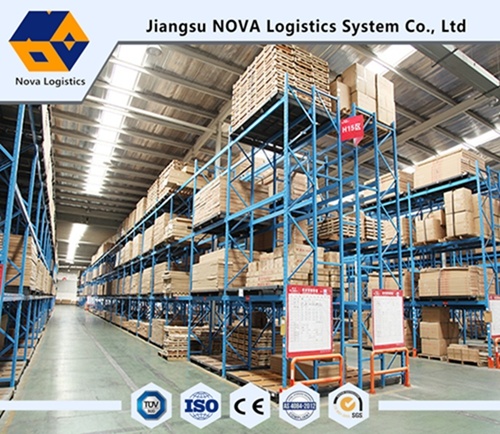
Standard selective layouts consist of single-deep rows that provide direct, immediate access to every stored pallet. Forklifts can retrieve any load without moving other products out of the way. This setup utilizes standard upright frames and horizontal load beams, often paired with wire decking to support varied load sizes and prevent loose boxes from falling through the rack.
Highly versatile facilities with rapidly changing, highly mixed SKU profiles require this constant flexibility. While it requires the lowest initial capital expenditure, it yields the poorest space utilization. Selective layouts often require up to 50% of the total floor space to be dedicated to operating aisles. In expensive cold storage environments, this lack of density generally makes standard selective viable only for fast-picking zones or highly specialized inventory.
System Type | Storage Density | SKU Selectivity | Inventory Flow | Ideal Cold Storage Application |
|---|---|---|---|---|
Mobile Racking | Very High | 100% | Any | High SKU count, limited footprint |
Pallet Shuttle | Very High | Low | LIFO / FIFO | Low SKU count, high volume throughput |
Push-Back | High | Medium | LIFO | Medium SKU count, high volume |
Drive-In | High | Low | LIFO | Low SKU count, bulk seasonal storage |
Pallet Flow | High | Low | FIFO | Date-sensitive frozen food storage |
Selective | Low | 100% | Any | Highly mixed SKUs, rapid turnover picking |
Evaluating Warehouse Racking Systems requires a deep understanding of manufacturing processes. Roll-formed steel is created by feeding flat coils of cold sheet metal through a series of rollers to form a specific shape, typically featuring teardrop punch holes. Structural steel is hot-rolled into heavy C-channel profiles while the metal is molten, resulting in a significantly thicker and more rigid component.
In sub-zero environments, structural steel heavily outperforms roll-formed options. Structural steel withstands heavier forklift impacts, which occur frequently in cold storage due to operator fatigue, frosted windshields, and slippery floors. The thicker mass of structural C-channels resists cold embrittlement far better than thin-gauge roll-formed metal. Bolted structural connections also provide greater rigidity than the snap-in teardrop connections of roll-formed systems, preventing the frames from twisting under heavy dynamic loads.
Feature | Structural Steel (Hot-Rolled) | Roll-Formed Steel (Cold-Rolled) |
|---|---|---|
Manufacturing Process | Hot-rolled into solid C-channel shapes | Cold-rolled sheet metal bent into shape |
Impact Resistance | Extremely high; absorbs heavy forklift collisions | Moderate to low; prone to buckling upon impact |
Cold Embrittlement Risk | Low risk due to material thickness | Higher risk in deep freeze applications |
Connection Type | Heavy-duty bolted connections | Teardrop or slotted snap-in connections |
Ideal Cold Storage Use | Drive-In, Push-Back, Pallet Flow, High-Traffic Areas | Light-duty Selective, Ambient transition zones |
Standard powder coating presents significant risks in environments prone to condensation and frost. When a facility undergoes a defrost cycle, or when pallets move from a humid loading dock into a blast freezer, moisture settles directly on the steel. If powder coating chips from a minor impact, moisture penetrates beneath the paint layer, causing hidden rust that degrades the load-bearing capacity of the upright from the inside out.
Hot-dip galvanized finishes offer superior protection for components exposed to frequent temperature fluctuations. The galvanization process submerges the steel in molten zinc, creating a metallurgical bond that protects the steel even if the surface is scratched. Specifying hot-dip galvanized uprights and base plates ensures long-term structural integrity and eliminates the need for continuous rust remediation in damp freezer zones.
Cold storage facilities often build higher to save on land footprint, routinely pushing vertical storage heights past 40 feet. Storing heavy frozen goods at extreme heights dramatically shifts the center of gravity. This verticality necessitates stricter seismic engineering, regardless of the facility's geographic location. The dynamic forces exerted on a fully loaded, 40-foot tall structure require robust engineering to prevent catastrophic collapse during a seismic event.
Compliance dictates heavier base plates, larger anchor bolts, and robust structural anchoring into a reinforced concrete slab. Engineers must calculate the soil bearing capacity and the slab thickness to ensure the floor can support the concentrated point loads. Upright frames often require heavy-duty horizontal and diagonal bracing to prevent sway and twisting under heavy loads, ensuring the entire matrix acts as a single, rigid unit.
The primary trade-off in facility design revolves around density versus selectivity. Moving from Selective layouts to Drive-In, Push-Back, or Mobile configurations increases density by 40-60%. This density inherently reduces immediate access to specific pallets. In a Drive-In setup, an operator must remove all front pallets to reach a pallet stored in the back position, causing severe operational slowdowns if inventory is not properly slotted.
Calculating the break-even point requires analyzing inventory data. You must weigh the operational slowdowns of digging for SKUs against the energy savings gained from cooling a smaller footprint. If you store 50 pallets of the exact same frozen product, high density wins. If you store 50 different SKUs with only one pallet each, high selectivity is mandatory to prevent crippling labor inefficiencies.
Upfront capital expenditures for automated and high-density solutions often induce sticker shock. Pallet Shuttles and Mobile Racks require significant investments in motorized components, floor tracks, and control panels compared to static steel frames. Evaluating these systems requires a strict focus on long-term operating expenses.
The long-term savings generated by automated systems quickly offset the initial CapEx. A condensed footprint permanently lowers monthly refrigeration utility bills. Automated shuttles reduce the required forklift fleet size, slashing equipment maintenance and battery charging costs. Limiting forklift travel inside the freezer reduces labor costs and minimizes expensive impact damage to the infrastructure.
Labor shortages in cold storage environments continue to worsen. Working in sub-zero temperatures is physically demanding, leading to high turnover rates and increased labor costs. Facility managers must evaluate how easily chosen storage structures can integrate with future automation technologies like Automated Storage and Retrieval Systems (AS/RS) or Automated Guided Vehicles (AGVs).
Scalability requires precise engineering tolerances. AGVs and AS/RS cranes operate on strict mathematical coordinates. If a standard rack deflects or leans even a fraction of an inch under a heavy load, automated sensors will register a fault and halt operations. Future-proofing a facility demands specifying ultra-rigid structural steel with tight manufacturing tolerances to accommodate robotics without requiring a complete structural tear-down later.
Steel physically contracts when temperatures drop. A major risk occurs when installers erect the structure at ambient temperatures, and the facility subsequently pulls down to operating temperatures of -10°F or -20°F. This thermal contraction causes steel components to shrink, potentially loosening bolted connections and compromising the entire structural integrity of the bays.
Mitigation requires strict, specialized installation protocols. Engineers must calculate the coefficient of thermal expansion for the specific steel grade used. Installation teams must leave specific tolerances during the ambient build phase. Facility managers must mandate a comprehensive re-torquing of all structural bolts only after the facility reaches and stabilizes at its target sub-zero operating temperature.
Forklift collisions occur at a significantly higher rate in cold storage than in dry warehouses. Operators wear thick, insulated clothing that restricts mobility and peripheral vision. Windshields frequently frost over when transitioning between temperature zones. Slick, icy floors increase braking distances. When these factors combine in confined, high-density aisles, rack impacts become inevitable.
Mitigation strategies must focus on physical barriers and structural reinforcement. Specify heavy-duty, floor-anchored V-nose column protectors for every upright facing an aisle. Utilize reinforced structural uprights with double-column designs in high-traffic zones. Install heavy-duty rub rails along the entire length of Drive-In aisles to guide the forklift chassis and prevent the forks from striking the load-bearing frames.
Ice accumulation poses a severe threat to dynamic storage systems. Moving parts, such as Pallet Flow rollers, Push-Back cart wheels, and Mobile rack tracks, can easily freeze solid if condensation settles and turns to frost. A frozen wheel bearing causes the entire storage lane to jam, requiring dangerous manual intervention to free the stuck pallets.
Mitigation requires proactive maintenance and environmental controls. Implement specialized cold-rated lubricants for all bearings and moving parts to prevent freezing. Where applicable, utilize heated components or heated floor tracks for mobile systems. Integrate strict dehumidification controls into the facility's HVAC design to strip moisture from the air before it can settle and freeze on the steel infrastructure.
There is no universal system for every facility. The optimal layout depends entirely on the intersection of your specific SKU profile, throughput velocity, and vertical facility dimensions. High-density solutions save energy, while high-selectivity solutions save labor time. Balancing these factors dictates your operational success.
When shortlisting solutions, follow this core logic: Choose Pallet Flow for strict FIFO food storage requirements. Choose Drive-In, Push-Back, or Pallet Shuttle configurations for low-SKU, high-volume bulk freezing. Choose Mobile configurations for maximum density while retaining full SKU selectivity. Regardless of the configuration, default to structural steel to ensure longevity and safety in harsh conditions.
To move forward effectively, execute the following steps:
Conduct a comprehensive inventory data analysis detailing your exact SKU count, pallets per SKU, and seasonal turnover rates.
Calculate your absolute cost-per-pallet-position threshold to establish a realistic budget for high-density upgrades.
Map out your facility's clear height and column spacing to identify vertical optimization opportunities.
Engage a structural engineer experienced in thermal load dynamics and seismic compliance before issuing any formal Request for Proposal.
For businesses seeking reliable storage solutions, NOVA specializes in designing and manufacturing professional warehouse racking systems for various industrial applications. With expertise in customized storage solutions and warehouse optimization, NOVA helps customers improve space utilization, enhance operational efficiency, and develop safer, more reliable storage environments, including demanding cold storage facilities.
A: The best system minimizes the cooled footprint while matching your inventory flow. High-density solutions like Mobile Racking, Push-Back, or Pallet Shuttles are ideal because they condense storage and reduce refrigeration volumes. Structural steel should always be used to withstand extreme cold and forklift impacts.
A: Structural steel is hot-rolled into thick C-channels, offering superior impact resistance against forklifts. In sub-zero temperatures, standard thin-gauge steel becomes brittle and prone to failure. Structural steel maintains its integrity, resists cold embrittlement, and utilizes heavy bolted connections for maximum stability.
A: Cold storage structures prioritize vertical space optimization to reduce the cooled footprint. They require specialized coatings like hot-dip galvanization to prevent rust from condensation. Additionally, the designs must accommodate thermal contraction during temperature pull-downs and incorporate specific flue spaces to ensure proper cold airflow.
A: While possible for very light loads or static areas, it is generally discouraged. Roll-formed steel is thinner and highly vulnerable to forklift damage, which is common in freezers due to slick floors and reduced operator visibility. Structural steel is far safer and more durable.
A: Mobile systems eliminate static aisles, condensing the required cubic footage for storage. By shrinking the physical footprint, they directly reduce the volume of air the refrigeration units must continuously cool, leading to massive reductions in monthly utility and energy costs.
A: Pallet shuttles require cold-rated lithium-ion batteries that resist degradation in sub-zero temperatures. Maintenance involves regular track inspections for ice buildup, applying specialized cold-rated lubricants to wheel bearings, and ensuring optical sensors remain free of frost to maintain automated navigation accuracy.